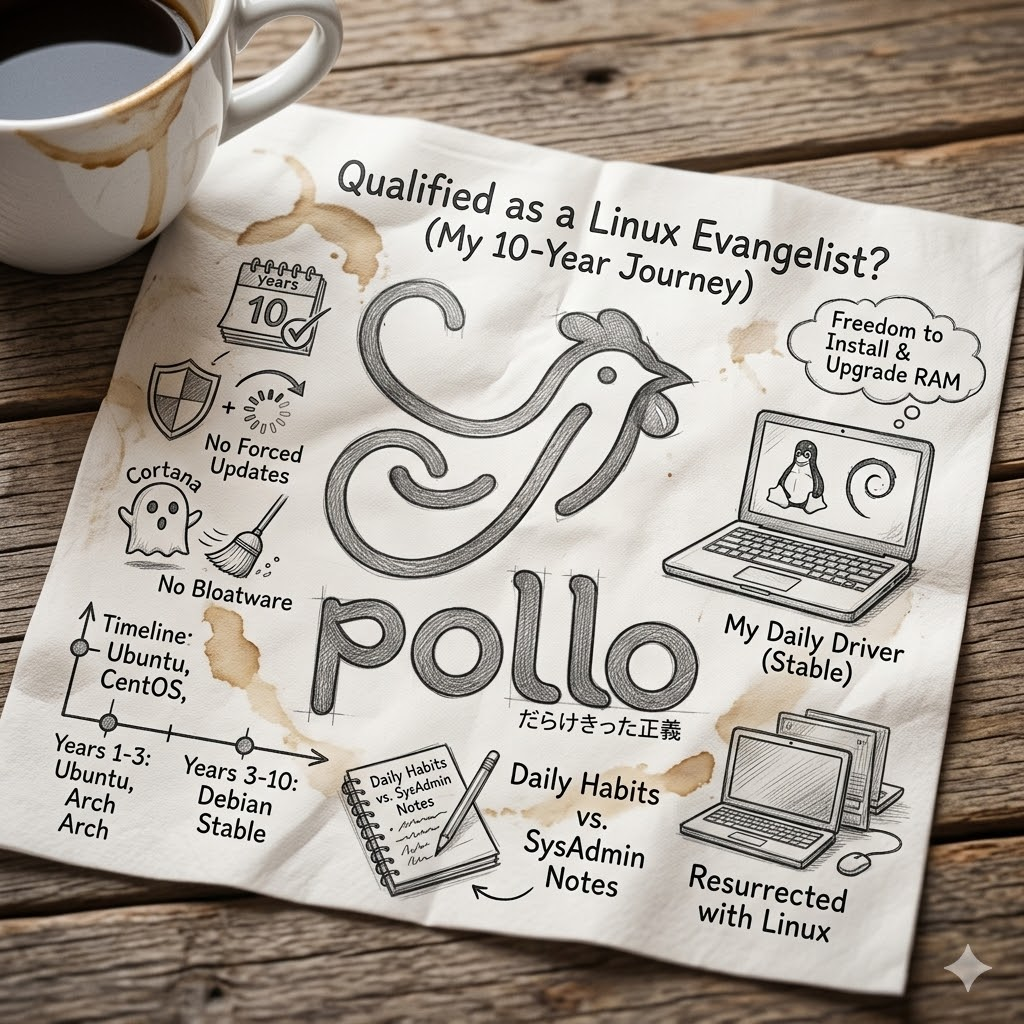
After working for over a decade and using Linux as my primary operating system for nearly 10 years, honestly, am I qualified to be a Linux evangelist yet? This series marks a new chapter for me, where I plan to share my daily usage habits. As for SysAdmin and operations stuff? I won’t be sharing too much of that, mainly because there are already so many people out there who write about it way better than I do. For that part, it’s probably best if I just stick to sharing my own notes.
So, let’s get right into it!
Where should we begin?
First, let me tell you why I’ve stuck with Linux as my daily driver for the past 10 years. When it comes to my usage habits, all I really want is a rock-solid, highly stable environment. I don’t want system updates pushing every week or two, and I definitely don’t want to be interrupted by an automatic update right in the middle of enjoying life—like gaming or watching a movie.
Plus, I own a few laptops. One of them only gets turned on once in a blue moon. They used to run Windows, and every single time they booted up and hit the internet, they would immediately start updating. Whatever I was planning to do, or whatever great idea I had brewing in my head, would instantly evaporate because of those tedious updates! So, I just installed Linux on all of them to root out the problem once and for all.
Of course, the network environment is much more dangerous today, so I still highly recommend that everyone updates their computers from time to time.
Another reason that keeps me using Linux as my daily driver is not having to deal with forced marketing for software I’ll never use. Most of them—no, actually, the vast majority of them—are completely useless and constantly pop up notifications saying “Hey, I’m over here!” and other bloatware nonsense. Case in point: Cortana.
Now, you might ask, why not use on Mac? Well, I deal with Linux a lot more at work, and Linux gives me the freedom to install it on absolutely any computer with virtually zero restrictions. Don’t get me wrong, I like Macs too—but the hardware entry barrier is just so high, and those hardware limitations cut off a lot of use cases. For example, being able to freely upgrade RAM to turn a laptop into a virtual machine platform.
Linux has plenty of distributions. During my first three years, I tried out quite a few distros, including Ubuntu 16.04, Debian 9, CentOS 7, Oracle Linux 7, and Arch Linux. After bouncing around between them, I eventually settled on Debian. Why? Because it’s just pure, simple stability.